
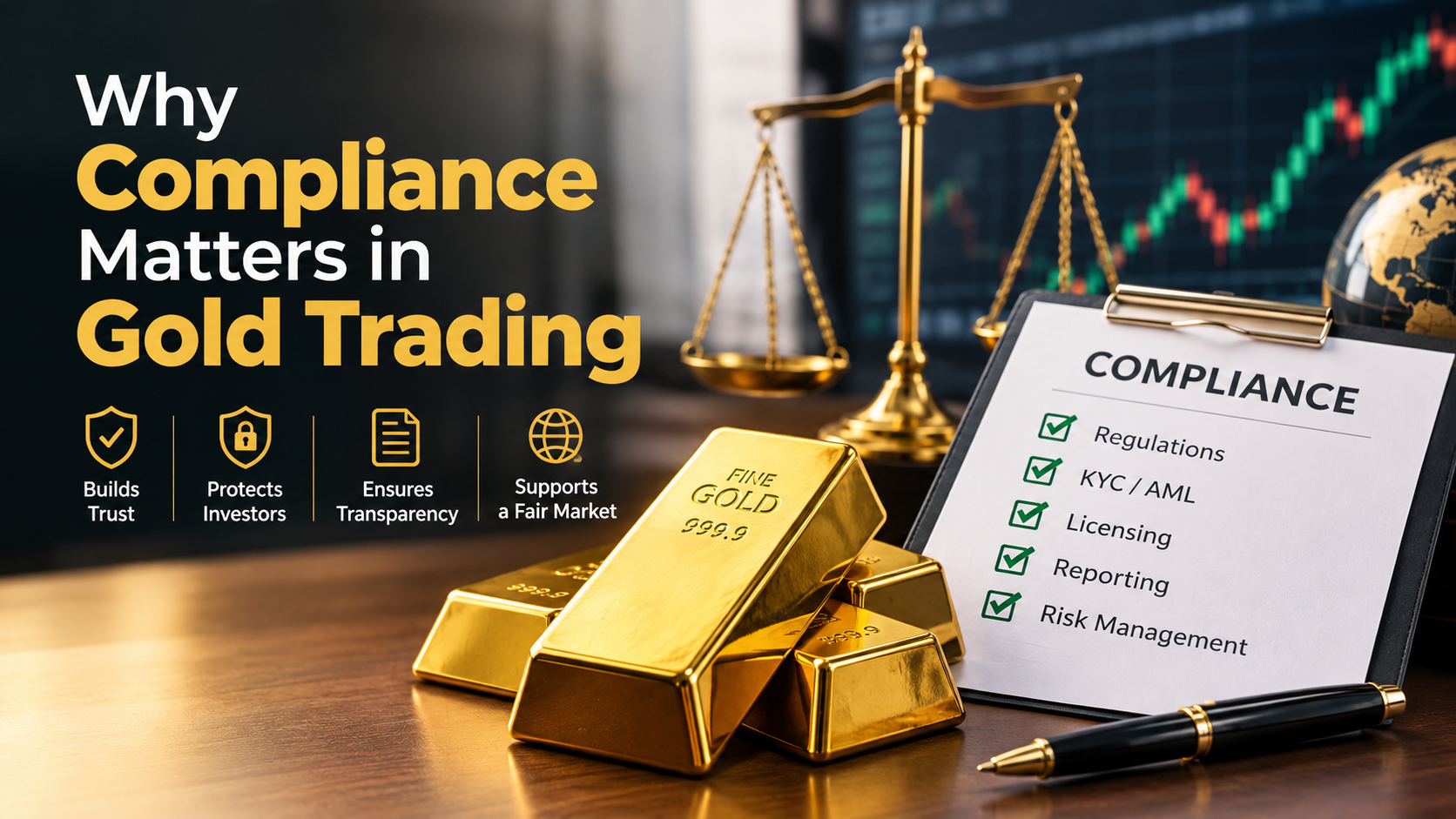
Gold trading is a valuable part of the global precious metals market, attracting investors, dealers, refiners, exporters, and financial institutions. However, behind every successful gold transaction is an important factor that should never be overlooked: compliance.
Compliance in gold trading means following applicable laws, regulations, industry standards, and ethical practices throughout the gold supply chain. From verifying the identity of buyers and sellers to maintaining accurate transaction records, compliance helps protect businesses, investors, and the integrity of the gold market.
As the global gold industry continues to evolve, understanding why compliance matters in gold trading is essential for anyone involved in buying, selling, exporting, or investing in gold.
What Is Compliance in Gold Trading?
Gold trading compliance refers to the policies and procedures that businesses follow to ensure their transactions meet applicable legal, regulatory, and ethical requirements.
These requirements vary depending on the country, the type of business, and the nature of the transaction. They may include anti-money laundering (AML) regulations, know-your-customer (KYC) procedures, licensing requirements, tax obligations, customs documentation, and responsible sourcing standards.
For gold dealers, exporters, importers, and investors, maintaining compliance is more than a legal obligation. It is a foundation for building credibility, reducing risk, and establishing long-term business relationships.
1. Compliance Helps Prevent Money Laundering and Financial Crime
Gold is a high-value commodity that can be traded across borders and converted into cash or other assets. These characteristics can make the gold market vulnerable to money laundering, fraud, sanctions evasion, and other financial crimes.
Strong compliance procedures help businesses identify suspicious activities and reduce the risk of becoming involved in illegal transactions.
Key measures include:
Know Your Customer (KYC): Verifying the identity of customers and business partners.
Anti-Money Laundering (AML): Implementing procedures to detect and report suspicious transactions where legally required.
Transaction monitoring: Reviewing transactions for unusual patterns or inconsistencies.
Record keeping: Maintaining accurate documentation to support transparency and regulatory reporting.
By implementing these measures, gold trading businesses can strengthen their internal controls and contribute to a more secure and trustworthy market.
2. Compliance Builds Trust With Buyers and Sellers
Trust is one of the most important assets in the gold trading industry. Buyers want confidence that the gold they purchase is genuine, while sellers need assurance that their business partners are legitimate and capable of completing transactions.
A compliant gold trading company demonstrates professionalism by following established procedures, verifying counterparties, maintaining proper documentation, and communicating transparently.
This commitment can help attract reputable buyers, establish stronger supplier relationships, and improve a company’s reputation in local and international markets.
In an industry where transactions may involve significant financial value, trust can be a major competitive advantage.
3. Compliance Protects Businesses From Legal and Financial Risks
Failure to comply with applicable gold trading regulations can expose a business to serious consequences. Depending on the jurisdiction and the nature of the violation, these may include fines, licence suspension, criminal penalties, seizure of goods, delayed shipments, or restrictions on business operations.
Non-compliance can also lead to expensive disputes, damaged business relationships, and reputational harm.
A strong compliance programme helps businesses identify potential risks before they become costly problems. This includes understanding local gold trading laws, obtaining the necessary licences, meeting tax and customs obligations, and keeping complete records of purchases and sales.
Proactive compliance is generally more effective and less costly than dealing with regulatory violations after they occur.
4. Responsible Gold Sourcing Promotes Ethical Trading
Compliance in gold trading extends beyond financial regulations. Responsible sourcing is also an important consideration for businesses that want to operate ethically and sustainably.
Gold may pass through multiple stages before reaching the final buyer, including mining, aggregation, refining, transportation, and export. Without adequate due diligence, businesses may face the risk of sourcing gold linked to illegal mining, human rights abuses, environmental harm, corruption, or conflict-related activities.
Responsible sourcing practices can include:
Verifying suppliers and the origin of gold.
Conducting risk-based supply chain due diligence.
Maintaining traceability and supporting documentation.
Assessing environmental, social, and human rights risks.
Following applicable responsible sourcing and import requirements.
These measures help businesses make more informed sourcing decisions and demonstrate accountability throughout the gold supply chain.
5. Compliance Supports International Gold Trading
International gold trading involves more than agreeing on a price and arranging delivery. Cross-border transactions may require export permits, import approvals, customs declarations, tax documentation, transport records, and compliance with applicable sanctions and trade restrictions.
Requirements differ between countries, so exporters and importers must understand the rules that apply to their specific transactions.
Proper documentation and regulatory preparation can help reduce shipment delays, avoid unnecessary costs, and make it easier to work with reputable international buyers, logistics providers, refiners, and financial institutions.
For businesses involved in gold exports, compliance should be considered at the beginning of a transaction rather than after the gold is ready for shipment.
6. Compliance Improves Transparency and Accountability
Transparency is essential for maintaining confidence in gold trading. Businesses need to demonstrate where gold originated, who supplied it, how transactions were conducted, and whether the relevant requirements were satisfied.
Accurate invoices, purchase agreements, assay reports, transport documents, customer verification records, and other transaction records can help create a clear audit trail.
Depending on the transaction and applicable rules, businesses may also need to verify the weight, purity, ownership, and origin of the gold.
Greater transparency makes it easier to investigate discrepancies, resolve disputes, detect suspicious activity, and demonstrate compliance during regulatory inspections or commercial due diligence.
7. Compliance Strengthens Long-Term Business Growth
Compliance should not be viewed only as an administrative expense. When implemented effectively, it can support sustainable growth and improve a company’s ability to compete in the gold market.
Businesses with reliable compliance systems may be better positioned to establish partnerships with reputable suppliers, attract institutional buyers, meet customer due diligence requirements, and expand into new markets.
A well-organised compliance framework can also improve operational efficiency by standardising procedures, clarifying employee responsibilities, and reducing avoidable errors.
Over time, these benefits can help a gold trading company build a stronger reputation and more resilient business relationships.
Essential Compliance Practices for Gold Trading Businesses
Gold dealers, exporters, importers, and other market participants should establish procedures that reflect their business activities and the legal requirements of the jurisdictions in which they operate.
Important practices include:
Understand the law: Identify applicable gold trading, licensing, tax, customs, AML, and sanctions requirements.
Verify customers and suppliers: Conduct appropriate identity checks and risk-based due diligence.
Maintain transaction records: Keep accurate invoices, contracts, payment records, and supporting documentation.
Check gold quality and origin: Obtain appropriate assay evidence and assess provenance where relevant.
Monitor suspicious activity: Establish procedures for identifying, escalating, and reporting suspicious transactions where required.
Review suppliers regularly: Assess supply chain risks and update due diligence as circumstances change.
Train employees: Ensure relevant staff understand compliance responsibilities and reporting procedures.
Conduct periodic reviews: Evaluate internal controls and update policies when laws, risks, or business operations change.
Businesses should seek qualified legal or compliance advice when requirements are unclear, especially when transactions involve multiple countries.
The Importance of Gold Trading Compliance in Uganda and International Markets
For businesses operating in Uganda or trading with international partners, compliance requires attention to both domestic obligations and the requirements of the destination or source country.
Depending on the activity, relevant considerations may include business and trading licences, mineral dealing or export authorisations, customs and tax requirements, applicable anti-money laundering obligations, and documentation establishing the legitimacy and origin of gold.
International counterparties may also apply their own supplier verification, responsible sourcing, sanctions screening, and traceability standards.
Because regulatory requirements can change and differ according to the role of each business, gold traders should verify the current rules with the appropriate Ugandan authorities and qualified professionals before conducting transactions.
Understanding these obligations can help businesses avoid preventable delays, strengthen international relationships, and operate with greater confidence.
Conclusion: Compliance Is the Foundation of Responsible Gold Trading
Compliance matters in gold trading because it protects businesses, strengthens trust, reduces financial and legal risks, promotes responsible sourcing, and supports transparency across the gold supply chain.
Whether you are a gold dealer, exporter, importer, investor, or supplier, following applicable regulations is essential for building a credible and sustainable operation.
In an increasingly interconnected gold market, businesses that prioritise due diligence, accurate documentation, ethical sourcing, and regulatory accountability are better equipped to establish lasting relationships and pursue long-term opportunities.
Responsible gold trading starts with compliance. By making compliance an integral part of every transaction, businesses can help create a more transparent, secure, and trustworthy gold industry.
Frequently Asked Questions (FAQs)
1. Why is compliance important in gold trading?
Compliance helps prevent financial crime, protects businesses from regulatory penalties, builds trust between trading partners, and supports responsible sourcing and transparent transactions.
2. What is KYC in gold trading?
Know Your Customer (KYC) refers to procedures used to verify customer identities and assess relevant risks. The exact requirements depend on the applicable laws and the type of business.
3. What documents may be required for gold trading?
Depending on the transaction and jurisdiction, documents may include trading licences, identification records, purchase invoices, contracts, assay certificates, proof of origin, transport documents, customs declarations, and export permits.
4. What are the risks of non-compliance in gold trading?
Potential consequences include financial penalties, loss of licences, shipment delays, seized goods, legal action, damaged reputation, and loss of access to business partners or markets.
5. How can gold traders ensure responsible sourcing?
Traders can conduct supplier due diligence, assess supply chain risks, verify available provenance documentation, maintain traceability records, and follow applicable responsible sourcing standards.
6. Does gold export require a licence?
Gold export requirements depend on the country, the type of gold, the exporter, and the transaction. Traders should confirm current licensing, tax, customs, and documentation requirements with the relevant authorities before exporting.
7. How does compliance improve investor confidence?
Clear documentation, transparent transactions, appropriate verification, and adherence to applicable regulations can help investors assess risks and build confidence in a gold trading business.
Disclaimer: This article is for general informational purposes only and does not constitute legal, tax, investment, or compliance advice. Requirements vary by jurisdiction and transaction type. Always verify current laws and consult a qualified professional where necessary.
Thank you for your sharing. I am worried that I lack creative ideas. It is your article that makes me full of hope. Thank you. But, I have a question, can you help me? https://accounts.binance.com/ar/register?ref=PORL8W0Z
Thank you for your sharing. I am worried that I lack creative ideas. It is your article that makes me full of hope. Thank you. But, I have a question, can you help me? https://www.binance.info/register?ref=IXBIAFVY
Thanks for sharing. I read many of your blog posts, cool, your blog is very good. https://www.binance.info/register?ref=QCGZMHR6